
rediffGURU Dr Deepa Suvarna offers advice on how to keep your kids healthy.

Several food and grocery delivery firms witnessed their highest ever single-day orders on New Year eve, December 31. Zomato achieved a record-breaking number of orders on its app. The company carried out nearly as many orders on December 31 as the total for the equivalent day in the period from 2015 to 2020.

The wholesale price-based inflation eased marginally to 12.07 per cent in June as crude oil and food items witnessed some softening in prices. However, WPI inflation remained in double digit for the third consecutive month in June, mainly due to a low base of last year. WPI inflation was (-) 1.81 per cent, in June 2020. Snapping the five straight months of uptick, the wholesale price index (WPI)-based inflation in June softened as prices of food articles and crude oil eased, even though manufactured products hardened.

Pani Puri, Samosas, Vadas, sandwiches may seem very tempting in the monsoon, but it is better to avoid them for your health, suggests Gayatri Trakru.

After falling 17 per cent since the start of the year to its March lows, the stock of the country's largest pharmaceutical (pharma) company, Sun Pharmaceutical Industries, has clawed back nearly half of those losses. Recent acquisitions, a favourable court ruling in the case of the hair loss drug Leqselvi, an edge over peers owing to its specialty portfolio, and a diversified global presence have supported the recovery.
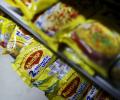
The measures include operationalising of standards on food additives for use in various categories.

A quick conversation with Miss India World Nandini Gupta, who has entered the quarterfinal of the 72nd Miss World competition.

NHRC directed Food Safety and Standards Authority of India (FSSAI) to submit its within eight weeks from the date of receipt of notice.

'Spending by the middle class is limited with a focus on savings. However, there is buoyancy at the top-end.'

S&P Global Ratings on Tuesday cut India's GDP growth projections to 6.5 per cent for the next fiscal as it expects that economies in the APAC region will feel the strain of rising US tariffs and pushback on globalisation. In its Economic Outlook for Asia-Pacific (APAC), S&P said despite these external strains, it expects domestic demand momentum to remain solid in most emerging-market economies.

Food in India has fled the confines of the kitchen and become a national adventure... Food shows, now even on news channels, have transformed restaurateurs from humble khansamas to courted celebrities.

Excessive sugar intake has been linked to brain inflammation, which can affect cognitive functions such as memory, learning, and decision-making, warns Pankaj Prakash Sharma, founder, Happa Foods.

India's e-commerce market alone is projected to reach $200 billion by 2026, making it a prime industry for ambitious entrepreneurs, explains rediffGURU Harsh Bharwani.

Regulator's nod assumed more importance after the Maggi issue.

The FMCG industry hopes for a revival in consumption growth in 2025 with some 'green shoots' already visible, after having a challenging year amid escalating input costs and a double-digit rise in food inflation, which ultimately slowed down the pace of the urban market growth in the second half of 2024. Soaring prices of commodities such as palm oil, coffee, cocoa and wheat forced FMCG players to go for a hike of 3 to 5 per cent or resort to shrinkflation by reducing pack sizes and grammage to retain attractive price points, fearing a volume loss.

With rising incomes, education, and health awareness in India, especially in the big cities, droves of people are saying no to sugar.

Naidu demanded the UPA government to involve the farmers as stake holders in SEZs by giving 15-20 per cent development land to those whose land was acquired for the zone.

The greater land-use in organic farming leads indirectly to higher carbon dioxide emissions, thanks to deforestation.

Test your knowledge of Indian street food with this fun quiz!

India's economy is projected to grow between 6.3 per cent and 6.8 per cent in FY26, according to the Economic Survey 2024-25, tabled in Parliament on Friday. The survey highlights that the country's economic fundamentals remain strong, supported by a stable external account, fiscal consolidation, and private consumption. It noted that the government plans to strengthen long-term industrial growth by focusing on research and development (R&D), micro, small, and medium enterprises (MSMEs), and capital goods.

The wholesale price index-based inflation remained in the negative territory for the sixth straight month in September at (-)0.26 per cent, on easing prices of food articles. The WPI-based inflation rate has been in the negative since April and was (-)0.52 per cent in August. In September last year, it was 10.55 per cent.

Avoid microwaving food or beverages in plastic containers, as heat can accelerate chemical leaching, suggests Dr Sudha Desai.

India's policy for agriculture trade must move commodity-by-commodity to gain maximum benefits as US President Donald Trump's 26 per cent tariff on exports from the country take effect, said agriculture economist Ashok Gulati in a recent policy paper.

The October-December quarter (Q3FY25) results of fast moving consumer goods (FMCG) major Hindustan Unilever (HUL) indicated weak demand, with urban growth muted and rural showing recovery. Consolidated revenue grew by 1.6 per cent (volume was flat) to Rs 15,818 crore, due to price hikes. Prices of key raw materials such as palm oil and tea remained elevated, leading to compression of gross margin.

Overall profitability in the agriculture sector is expected to be marginally higher at the pan-India level in the 2024-25 kharif season, driven largely by higher production and low input cost, but offset by the declining price of some produce, according to a report released by Motilal Oswal Financial Services Ltd on Wednesday. The report said that region-wise farm profitability in the northern belt was expected to be relatively better than in the southern belt, while the eastern and western belts presented a mixed bag.

Investors should tilt their portfolios towards domestic-facing defensive sectors, which should help provide stability and shield them from geopolitical and tariff risks.

Industry associations and companies in the United States, including the US Chamber of Commerce, Coalition of Services Industries and the iconic bike company Harley Davidson have called on the Donald Trump dispensation to push India to reduce tariffs, non-tariffs, and regulatory barriers to boost American exports.
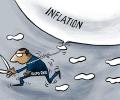
'As the Budget has taken some measures to spur growth, similar action from the MPC may be expected.'

Consume foods that keep you hydrated, are light and easy on the gut, advises Sanya Narang.

'The startup ecosystem, the government, and the owners of large pools of Indian capital need to actively support the creation of these local champions, not pull down the teams that are trying hard to get there.'
The government is expected to shortly classify the entire food products industry into three clearly defined categories, for licensing as well as taxation purposes.

'No retaliatory tariffs now. You can retaliate after a few months.' 'Today, there is no need to retaliate because it is a question of long term benefits.'

Food companies would not need to seek product approval from FSSAI if they meet these norms

The wholesale inflation rose to a 13-month high of 1.26 per cent in April fuelled by rising prices of food articles, especially vegetables, amid expectations of RBI holding interest rates in the policy review next month. The wholesale price index (WPI) based inflation has been rising for two months in a row.
India might not have started growing genetically modified food crops, but it does import food products that contain GM ingredients. Consumers who buy them have no way of knowing what they contain. The government has come up with guidelines to let you know if the item purchased is genetically modified.

The wholesale price-based inflation rate declined to (-) 4.12 per cent in June on easing prices of food, fuel and manufactured items. The wholesale price index (WPI) based inflation in May was (-) 3.48 per cent. In June last year, it was 16.23 per cent.

Dubai is positioning itself as a springboard for Indian companies looking to tap into fast-growing emerging markets, including Africa, banking on low tariffs, long-standing trade relations, and a shared vision for regional economic growth, said Mohammad Ali Rashid Lootah, president and chief executive officer, Dubai Chambers, at the Dubai-India Business Forum in Mumbai.

Wholesale price-based inflation remained in the negative territory for the fifth straight month in August at (-)0.52 per cent, but prices of food articles and fuel showed an uptick. The wholesale price index (WPI) based inflation rate has been in the negative since April and was (-)1.36 per cent in July. In August last year it was 12.48 per cent. Inflation in food articles remained in double digit at 10.60 per cent in August, lower than 14.25 per cent in July.

Amid the ongoing festival season and ahead of the elections for five state assemblies, the Centre is closely monitoring inflation, particularly in food items, to enable it to take steps to increase their supplies. "There is a complete no-nonsense attitude when it comes to food inflation, and instructions have been issued at all levels to be very sensitive to any possible price movements in any commodity," a senior official explained. Sources have said that all departments dealing with food items have been instructed to keep a close eye on all commodities and maintain a weekly record of their price movements.

Fast-moving consumer goods (FMCG) distributors' association has written to the finance ministry, highlighting concern over fund utilisation and fund accumulation by quick commerce companies and deep discounting of goods on their platforms. According to a recent letter seen by Business Standard, All India Consumer Products Distributors Federation (AICPDF) noted that its analysis indicated that approximately 80 per cent of these funds were directed toward customer acquisition strategies instead of creating cutting-edge innovations or sustainable growth models for the retail sector.
